


Hello everyone! Welcome to Bibliophilia Book Reviews…again. My name is Melina, and I am a bibliophile, a lover of books, a bibliophage, an ardent reader and a bibliotaph. I hoard books. I am all things biblio. In this blog, I review books of different genres including literary fiction, nonfiction, memoirs, fantasy, YA, and others. Please feel free to turn the page and look around. Hopefully, one of my reviews will help you decide to pick up a book or not. If you’re interested in a review for your published book, please click here to get on my wish list. Happy…
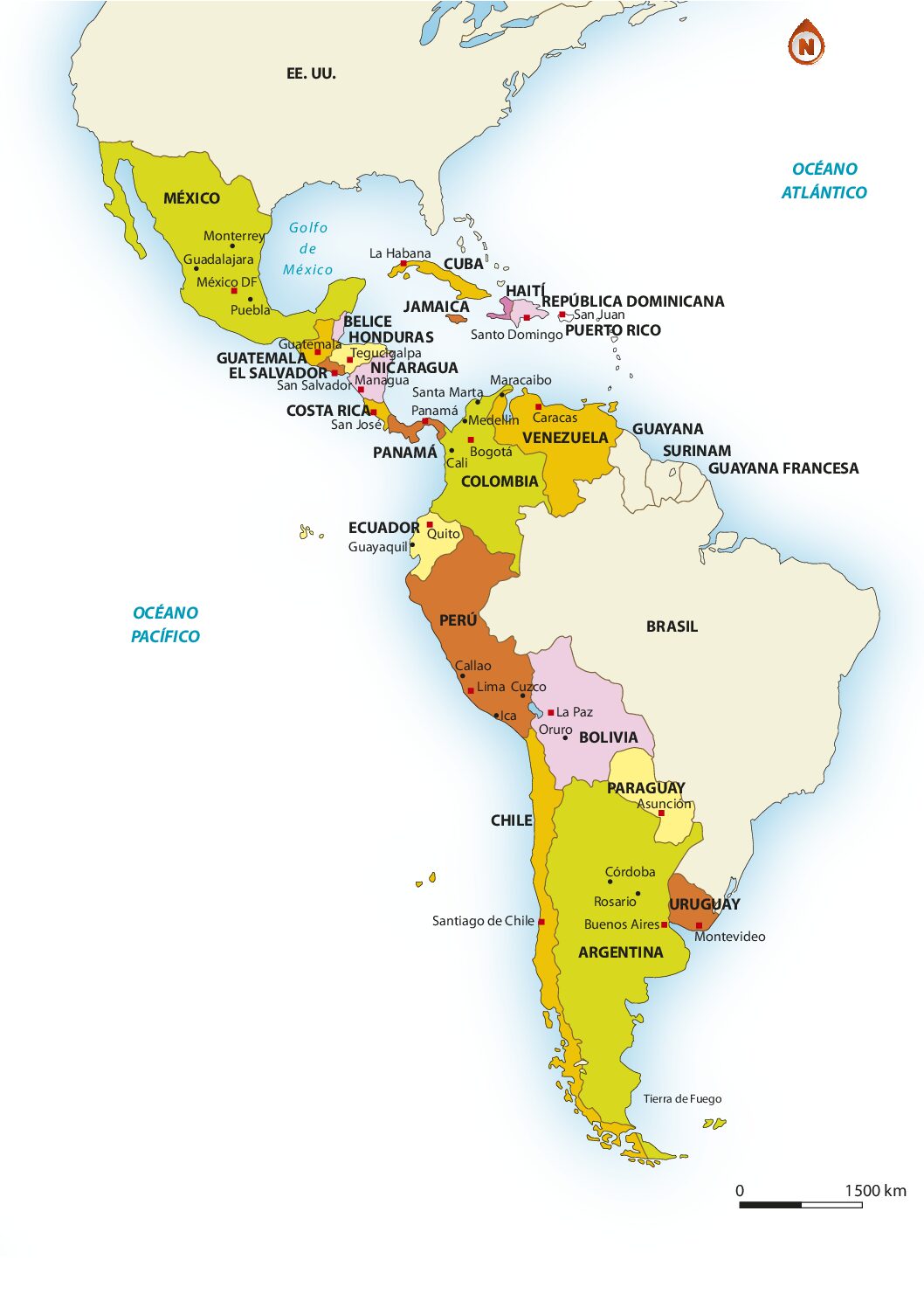
Hi everyone. Welcome back to Bibliophilia Book Reviews. In this post, I am making a list of books written in Spanish America (or Hispanic America) that are currently on my TBR. Some of these books I read a long time ago during college, but it’s been long enough that I don’t remember much about them. And to celebrate Hispanic Heritage month this year, I thought it’d be fun to let you know about these books in case you too feel like picking them up. Here we go!
Argentina
Rayuela por Julio Cortázar (1963); Hopscotch (1966) by Julio Cortázar
Originally published in Spanish in 1963 and then translated to English in 1966, this novel is “regarded as one of the greatest, most innovative and influential Latin American novels. It was one of the novels on my undergraduate class of Latin American literature, but I never finished it. So, it is still on my TBR. I will say, though, that I was fortunate enough to visit Cortázar at his burial place in Montparnasse Cemetery in Paris, France, in 2015.


El Aleph por Jorge Luis Borges; The Aleph by Jorge Luis Borges
I read this short story during my graduate studies and it is worth going back to every time you peruse your bookshelves and pick it up. It is about “a point in space that contains all other points in the universe simultaneously (EBSCO)”. Borges is a deeply philosophical writer that plays with the notions of infinity, perception, the limits of language, and memory in his work. Today, he is considered one of the giants of Hispanic and Latin American literature.

Bolivia
Raza de bronce por Alcides Arguedes; Race of Bronze by Alcides Arguedes
I have not read this novel yet, but it is high on my TBR. Published in 1919, this novel is known as the literary work that pioneered the indigenista literary movement in Latin America. This novel “portrays the harsh life, exploitation, and abuse of Aymara indigenous communities by white landowners on an Andean highland estate, ultimately sparking an indigenous rebellion (Wikipedia)”.

Chile
La amortajada por María Luisa Bombal; The Shrouded Woman by María Luisa Bombal
Bombal is a Chilean author with two short novels, La amortajada (1938) and La última niebla (1934). I have spoken about La amortajada or The Shrouded Woman in English several times in this blog, and highly recommend this short novel to enthusiast readers of books written in Spanish.


El oscuro pájaro de la noche por José Donoso; The Obscene Bird of Night by José Donoso
This is another book that I picked up during college, and because it’s been almost 20 years since I read it, I added it to my TBR again. Published in 1970, this novel “explores the cyclical nature of life and death and the connection between childhood and old age through shared fears and fantasies and a mutual lack of bodily control. Donoso invokes the Imbunche myth to symbolize the process of reduction of the physical and intellectual self, turning the living being into a thing or object incapable of interacting with the outside world, and depriving it of its individuality and even of its name. This can either be self-inflicted or forced upon by others (Wikipedia).” I remember this novel being really hard, but I am hoping now that I am older, I will understand it better.


Colombia
Cien años de soledad por Gabriel García Márquez; A Hundred Years of Solitude by Gabriel García Márquez
Cien años de soledad was my favorite book of 2025. I read it back-to-back in Spanish and English and I loved it in both languages. Rabassa’s translation is superb. Highly recommended.


Sé Morir por Elena Mesa
The protagonist of this short novel is 18 years old when he runs away from home and goes to live at a monastery. He wants to spend the rest of his life in silence and solitude. And does try to. But, a year later, he dies. According to the author, Sé Morir is an ode to love between siblings, an ode to silence, and an ode to every hard decision we’ve ever had to make and that has transformed us into a better version of ourselves; it is a journey seeking to answer what is life and death? I have not read this novel yet, but it is definitely on my TBR.

Costa Rica
Única mirando al mar por Fernando Contreras; Única looking at the sea by Fernando Contreras
This book “explores the lives of society’s outcasts living in the massive Río Azul garbage dump outside San José (The Modern Novel)” and it “highlights the harsh contrast between the wealthy urban bourgeoisie (and indifferent government offices) and the invisible underclass that handles their waste.”


Cuba
Alejo Carpentier “was a pivotal Cuban novelist and a key figure in 20th Century Latin American literature.” His most notable works include The Kingdom of this World and The Lost Steps, both of which showcase how his “exposure to African elements in Cuban society and his subsequent political activism profoundly influenced his literary work. His writings explore themes of identity, history, and the magical realism of Latin America, highlighting the extraordinary aspects of everyday life (EBSCO).”


Ecuador
Huasipungo por Jorge Icaza; The Villagers by Jorge Icaza
This novel is a “well-known indigenist novel, a movement in Latin American literature that preceded magical realism that exposes the brutal exploitation of Andean indigenous laborers.” The title refers to a small plot of land given to an indigenous worker by an haciendas owner in exchange for forced labor instead of wages. The word comes from Kichwa wasipunku. The major themes in this novel are systemic oppression of the indigenous people of Ecuador and how greed strips them of basic human dignity, land, and survival.


El Salvador
El asco, Thomas Bernhard en San Salvador por Horacio Castellanos Maya; Revulsion: Thomas Bernhard in San Salvador
This novel “represents the mass exodus of Salvadorans during and after the country’s Civil War (1979-92).” It is “the story of Edgardo Vega, an emigrant who returns to El Salvador in the mid-1990s after living in Canada for eighteen years written in an oral monologue that recalls the testimonial project of the revolutionary years; however, Vega’s narcissistic story distorts the “testimonio” to capture the disillusion and contradiction of the postwar years. Through a perversion of the “testimonio’s” form and content and also by parodying the post-World War II Austrian writer Thomas Bernhard, “El asco,” meaning disgust or repulsion, criticizes El Salvador’s postwar reality and imagines the Salvadoran transnational community. Furthermore, the use of fiction allows Castellanos Moya to denounce the “testimonio’s” claim on authenticity without abandoning its social project” (A Postwar Perversion of “Testimonio” in Horacio Castellanos Moya’s “El asco”, ERIC).


Un día en la vida por Manlio Argueta; One Day of Life by Manlio Argueta
This book is a “day in the life of Guadalupe Guardado and the women in her family in Chalatenango, El Salvador, just before the Civil War in El Salvador. This book was banned and its sale was prohibited in El Salvador due to its negative portrayal of the country’s government and after accounts of human rights abuses by the Nationalist Democratic Organization—the government’s paramilitary intelligence organization—came to light” (Wikipedia).


Guatemala
Miguel Ángel Asturias is the “most universal Guatemalan writer. His work, a precursor of the so-called boom in Latin American literature, combines elements of the continent’s native culture and the baroque style imported from Europe to create a complex universe that anticipates what would later be termed “magical realism”. His most notable works include El señor Presidente (Mr. President) and Hombres de maíz (Men of Maize). In 1967, he won the Nobel Prize in Literature for his “vivid literary achievement, deep-rooted in the national traits and traditions of Indian peoples of Latin America (Agencia Literaria Carmen Balcells).”


Honduras
Blanca Olmedo por Lucila Gamero de Medina; Blanca Olmedo by Lucila Gamero de Medina
This book is a landmark romantic and feminist novel written by Honduran author Lucila Gamero de Medina. The story follows the tragic romance between Blanca Olmedo and Gustavo Moreno, whose relationship faces intense opposition from powerful figures such as a priest, a devout religious woman and a corrupt judge. The book “strongly criticizes social injustices, the corruption within certain elements of the Catholic Church, and the corruption of the Honduran legal system (Editorial Guaymuras)”.

Prisión verde por Ramón Amaya Amador
This novel is set at the beginning of the 20th Century in the banana plantations of northern Honduras. First published in 1950, this novel is a social and historical critique of labor overexploitation, misery and the domination of American fruit companies with the complicity of local governments (Cinco Books).

México
Pedro Páramo por Juan Rulfo; Pedro Paramo by Juan Rulfo
This short novel is known today as “the most important book written in Spanish in the 20th century (Literary Theory and Criticism).” Pedro Páramo is a masterclass in “blending Mexican folklore and modern experimental narrative techniques such as stream of consciousness, flashbacks, and consequent monologues” and it pioneered a new literary trend in Mexico: magical realism and the Latin American boom. Before Pedro Páramo, there was the technique of the novel of the Mexican Revolution; that is, the technique of naturalistic realism. The Underdogs by Mariano Azuela is a prime example of this trend. Juan Rulfo, on the other hand, “created a phantasmagoric and mythic narrative” and his novel, originally published in 1955, quickly became one of Mexico’s founding fictions.
The Mexican Revolution and its aftermath―the Cristero War―heavily influenced Juan Rulfo when he wrote Pedro Páramo: “The aftermath of the revolution, which left little Juan Rulfo an orphan, inevitably colored Juan Preciado, who travels to his mother’s birthplace to search for his father, Pedro Páramo. Comala, however, is a purgatory of ghosts and souls in penance whose murmurs and disembodied voices fill the otherwise empty space. The dry and sterile landscape of the town reflects actual, isolated regions of Mexico after the revolution. The locale is an in-between space, and the inhabitants have doubled attributes, both real and spectral”.
I have read this short novel several times now and I always go back to it after several years. It is a book that does that; you will pick it up several times during your lifetime and you will have a different experience reading it every time. I highly recommend it.


Los recuerdos del porvenir por Elena Garro; Recollections of Things to Come by Elena Garro
Set in the fictional town of Ixtepec, during the aftermath of the Mexican Revolution and the Cristero War of the late 1920s, Los recuerdos del porvenir (Recollections of Things to Come) by Elena Garro is the story of the town itself―which acts as the collective narrator―that uses a nonlinear narrative to explore themes of historical memory, national identity, and sexism (Wikipedia).
This book was one of my favorites in 2022, and I highly recommend it.


Punto de cruz por Jazmina Barrera; Cross-stitch by Jazmina Barrera
This novel narrates the transition of three young girls from childhood to adulthood “in a society pierced with sexist, classist, racist, and environmental violence.” To resist that violence, the girls find solace in friendship and embroidery; these two things become “the primary tool for care, feeling, reparation, and resistance for the protagonists of this book.” This is a “novel-tapestry where various time periods, stories, conversations, and trips are interwoven. It is a story about growth, about the imbalances of identity, and the adolescent body (Indent Literary Agency).”
I have not read this novel yet, but it is high on my TBR.


Nicaragua
Margarita, está linda la mar por Sergio Ramírez; Margarita, How Beautiful the Sea by Sergio Ramírez
The title of this novel is based on the eponymous poem by Ruben Darío published in 1908, dedicated to Margarita Debayle, a young girl in Nicaragua. In the novel, that little girl, now a grown woman, becomes intertwined in the historical events and memories of the era, which include a 1956 political conspiracy to assassinate Nicaraguan dictator Anastasio Somoza García.
Sergio Ramírez won the prestigious Spanish literary award Premio Alfaguara with this historical novel.


Panamá
Los forzados de Gamboa por Joaquín Beleño; Gamboa Road Gang by Joaquín Beleño
Set in the Gamboa penal colony and road work gangs inside the U.S.-administered Panama Canal Zone, this book is based on the real-life case of Lester León Greaves, who was sentenced to 50 years in a Canal Zone federal prison for allegedly raping a white American girl. Today, this novel is a staple in high school literature curricula in Panama as a core text of the literatura canalera movement in the country. It deals with racial segregation, American imperialism, class division, and the psychological toll of a split nation.
Another book worth reading by this author is Luna verde.


Paraguay
Hijo de hombre por Augusto Roas Bastos; Son of Man by Augusto Roas Bastos
This book narrates the stories of men that are both witness and victims of the history of Paraguay. Roas Bastos attempts to “record the inner history of Paraguay and to record the many silenced voices: those of the indigenous population, the original independence fighters and their offspring, the artist who is forced to live in exile, and those decent men and women whose very decency exposes them to exploitation and oppression”. Today, Roa Bastos is considered one of the most important Latin American writers of the 20th century.


Perú
La fiesta del chivo por Mario Vargas Llosa; The Feast of the Goat by Mario Vargas Llosa
Published in 2000, this novel is set in the Dominican Republic and it focuses on the assassination of Rafael Trujillo, the country’s dictator from 1930 to his death in May 1961. The novel is told from two points of view: that of those who planned and killed Trujillo in 1961 and thirty-five years later, in 1996, which tells the history of Trujillo’s dictatorship, the years in which it was at its apogee, and the meaning it had for the island and its inhabitants. This is one of Vargas Llosa’s best books, and I highly recommend it.


Puerto Rico
Piel sospechosa por Luis Rafael Sánchez; Suspicious Skin by Luis Rafael Sánchez
This book is a compilation of essays that talk about racism and discrimination based on the color of your skin (or colorism). It was written in the span of fifty years, and it celebrates “the contribution of mixed-race and Black identity to the history and culture of the Caribbean, and it confronts the judgments and prejudices surrounding issues of race and social class that are present in the political and social evolution of Puerto Rico.”
This is also another book that is high on my TBR.

República Dominicana
En el tiempo de las mariposas por Julia Álvarez; In the Time of the Butterflies by Julia Álvarez
This book is a historical fiction novel that reimagines the lives of the Mirabal sisters, known as Las Mariposas (The Butterflies). The story is about how the sisters’ lives change from ordinary to fighting for freedom, justice, and human rights against the oppression imposed by Trujillo and his cronies. Another Dominican author who addresses this topic in his book is Junot Díaz, who wrote The Brief Wonderous Life of Oscar Wao, but I think that Alvarez’s book is better.


Uruguay
El astillero por Juan Carlos Onetti; The Shipyard by Juan Carlos Onetti
The Shipyard chronicles an anti-hero named Larsen who returns to a fictional place, Santa María, to try to revive a useless and abandoned shipyard (Agencia Literaria Carmen Balcells). This novel is allegorical and it reflects both the decay and breakdown of Uruguayan society and modern urban life.


Venezuela
Doña Bárbara por Rómulo Gallegos; Lady Bárbara by Rómulo Gallegos
This novel “portrays the epic, symbolic clash between civilization and barbarism as lawyer Santos Luzardo returns to reclaim his estate and confronts a ruthless local landowner, Doña Bárbara” (Wikipedia).

Las memorias de mamá Blanca por Teresa de la Parra; Mama Blanca’s Memoirs by Teresa de la Parra
A contemporary classic, this novel is an autobiography/fictionalized memoir of the author and her childhood in her father’s estate, Piedra Azul.

That is everything for today. I hope that some of these books were interesting enough for you to go to the bookstore and look for some of them. If so, happy reading!
Disclaimer: The map of Hispanic America is not mine. The original title for it is Mapa Hispanoamerica- Porto Editora and it is available on Scribd for educational purposes. I use it here to show readers the countries from which I am recommending books. Also, the pictures of those books in this post are not mine. I borrowed them from Goodreads. I only use them for review purposes. No copyright infringement intended.
Discover more from Bibliophilia Book Reviews
Subscribe to get the latest posts sent to your email.
